Advancing Interspecific Clivia Breeding: F1, F2 Genetics and Future Colour Development
By Carrie Krüger – Utopia Clivias
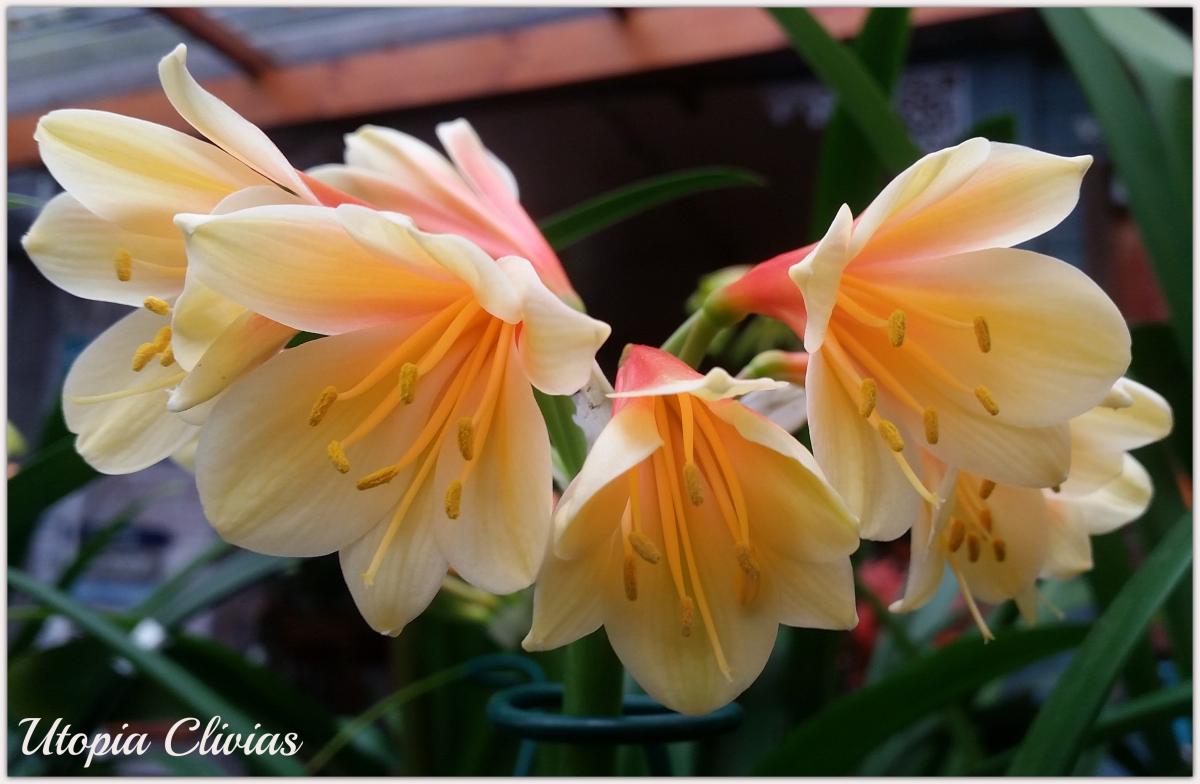
The interspecific flowering season is always an exciting time for breeders. Few experiences compare to seeing the first bud forming on a cross made four to five years earlier. From the moment a bud appears until the first flower opens, there is a sense of anticipation—waiting to see whether the outcome matches your original vision.
In Clivia breeding, results can range from disappointing to outstanding. Occasionally, a plant emerges that clearly surpasses expectations. These exceptional selections make the long breeding cycle worthwhile.
We regard interspecific breeding as the new era of Clivia development. Many of the most unusual and desirable colours in modern Clivias originate from species crosses. The greatest colour diversity is consistently found within interspecific genetics, and we believe the future of Clivia breeding lies within this gene pool.
The Value of the Second Generation
Experience has shown that the second generation (F2) often produces significant improvements in both flower form and colour intensity. Most F1 hybrids tend to have narrow, tubular flowers, sometimes with slight flaring, as observed in crosses involving Clivia robusta and Clivia caulescens.
When we began working with interspecifics many years ago, there were limited high-quality plants available, most of them F1 generations. We selected the strongest individuals based on flower form and colour and now primarily breed with our best F2 selections, including sibling crosses and self-pollinations.
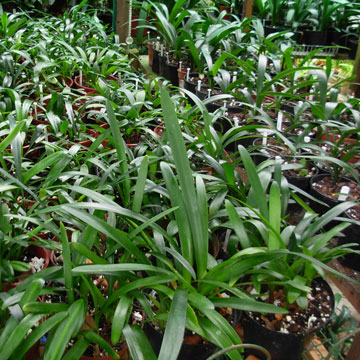
Because a single interspecific plant contains a wide genetic background, outcomes can never be guaranteed. For this reason, it is advisable to grow seedlings to flowering size before making final selections. Unfortunately, not all growers have the space to do this on a large scale.
Findings From Our Breeding Programme
Based on our experience over recent years, we have observed the following:
Always begin with superior F1 or F2 plants. This significantly reduces the time required to achieve advanced breeding results compared to starting directly from species material.
Versi traits can emerge from non-versi parents. For example, we have produced strong versi-type flowers such as “Ember Spirit.” Versi characteristics may be inherited through both pollen and pod parents.
Excessive use of Clivia miniata in repeated crosses can gradually shift flower structure back toward miniata-type characteristics. Balanced breeding is essential to maintain interspecific qualities.
Self-pollinated F2 plants can sometimes produce offspring superior to the parent. This demonstrates that selfing is a valuable strategy when the ideal pollen parent is uncertain. For example, “Planet Earth” illustrates the potential of selfed progeny.
Understanding compatibility groups is essential. Knowing which genetic groups your plants belong to ensures more predictable breeding outcomes.
Using compact plants as one parent can help produce shorter, more refined interspecifics. We have successfully used yellow Daruma-type plants to achieve this result. “Mirror Beauty” is an example of such a cross.
Crosses involving variegated or LOB-type plants have produced exceptional results. “Light of Africa” represents the potential of this breeding direction.
Conclusion
Interspecific hybrids have become increasingly popular in recent years, with many Clivia clubs now hosting dedicated interspecific shows during mid to late winter to showcase and promote these remarkable plants.
These hybrids offer an extended flowering season, typically beginning in early June and continuing through October in the Southern Hemisphere. They often flower at unexpected times, providing welcome colour during periods when collections consist mainly of foliage.
Interspecifics are generally vigorous, fast-growing, and often more disease-resistant than Clivia miniata. Many multiply readily, with some plants producing offsets even before flowering for the first time.
The range of colours, forms, and combinations available through interspecific breeding is virtually limitless.
These exceptional plants deserve a place in every serious breeder’s collection. We look forward to seeing many of our new crosses flower in the years ahead and to continuing the advancement of interspecific Clivia genetics.